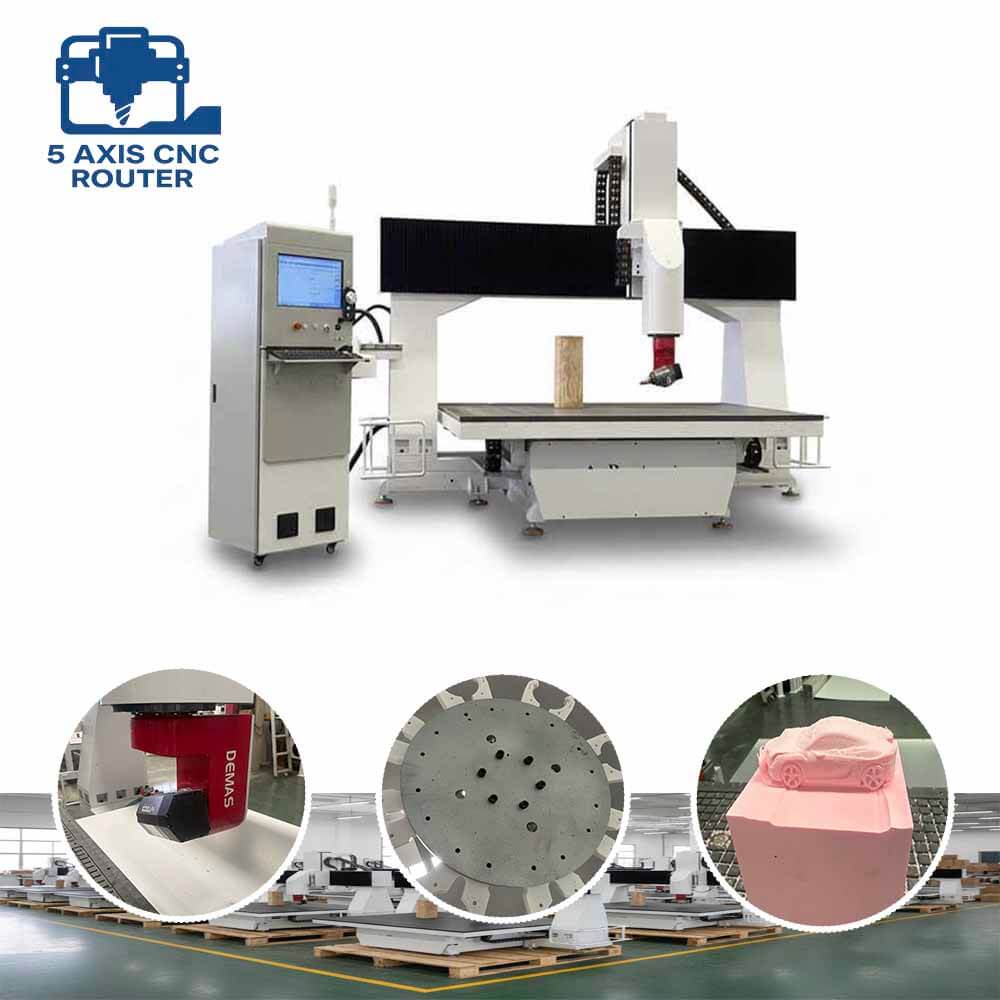
What Is a 5-Axis CNC Machine? — Comprehensive Guide to Multi-Axis Machining
In modern manufacturing and machining, complexity, precision, and efficiency go hand-in-hand.
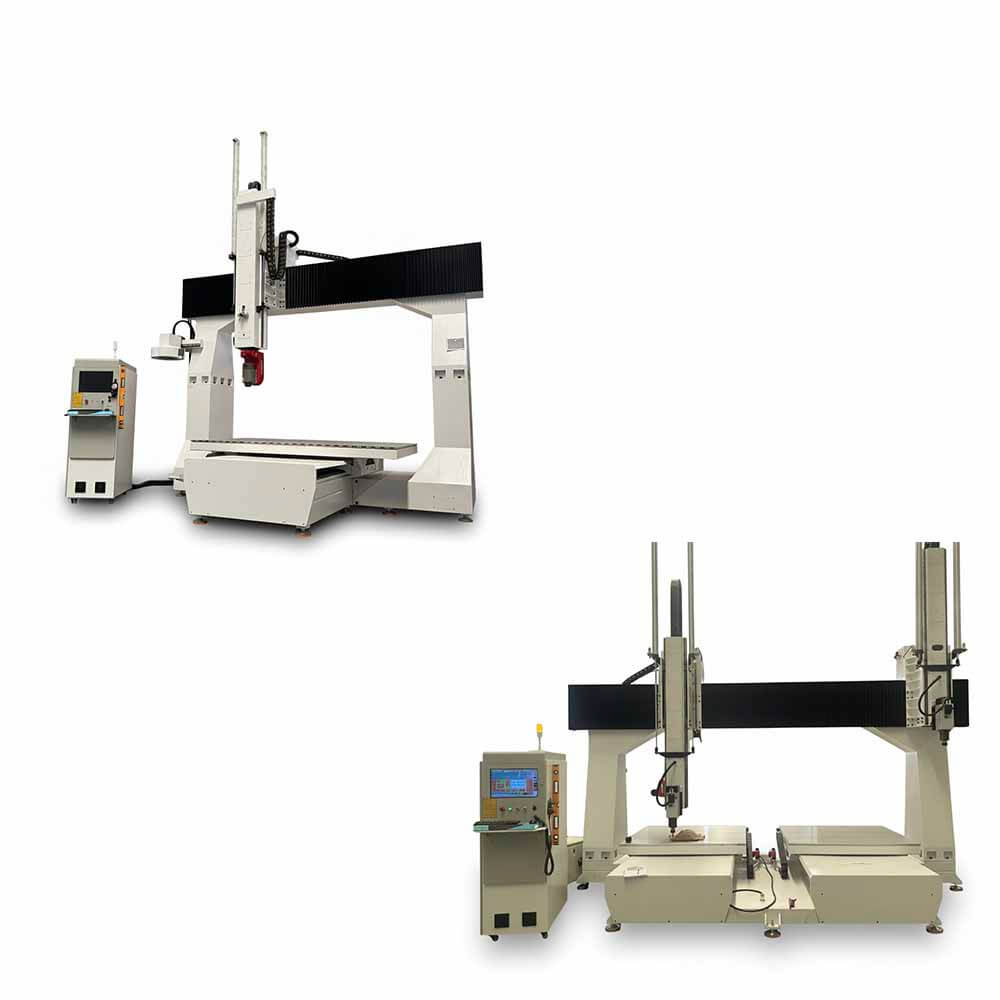
A true game-changer in this realm is the 5-axis CNC machine. With its ability to move tools and workpieces in multiple directions and angles, a 5-axis CNC machine enables the production of intricate, high-precision parts — from complex geometries and undercuts to smooth, contoured surfaces. For shops working in woodworking, metal machining, mold making, or custom production, understanding the power of 5-axis CNC is essential. This guide delves into what a 5-axis CNC machine is, how it works, its advantages over conventional CNC machines, and why it may be an optimal choice for your projects.
Table of Contents
What Is a 5-Axis CNC Machine — The Basics
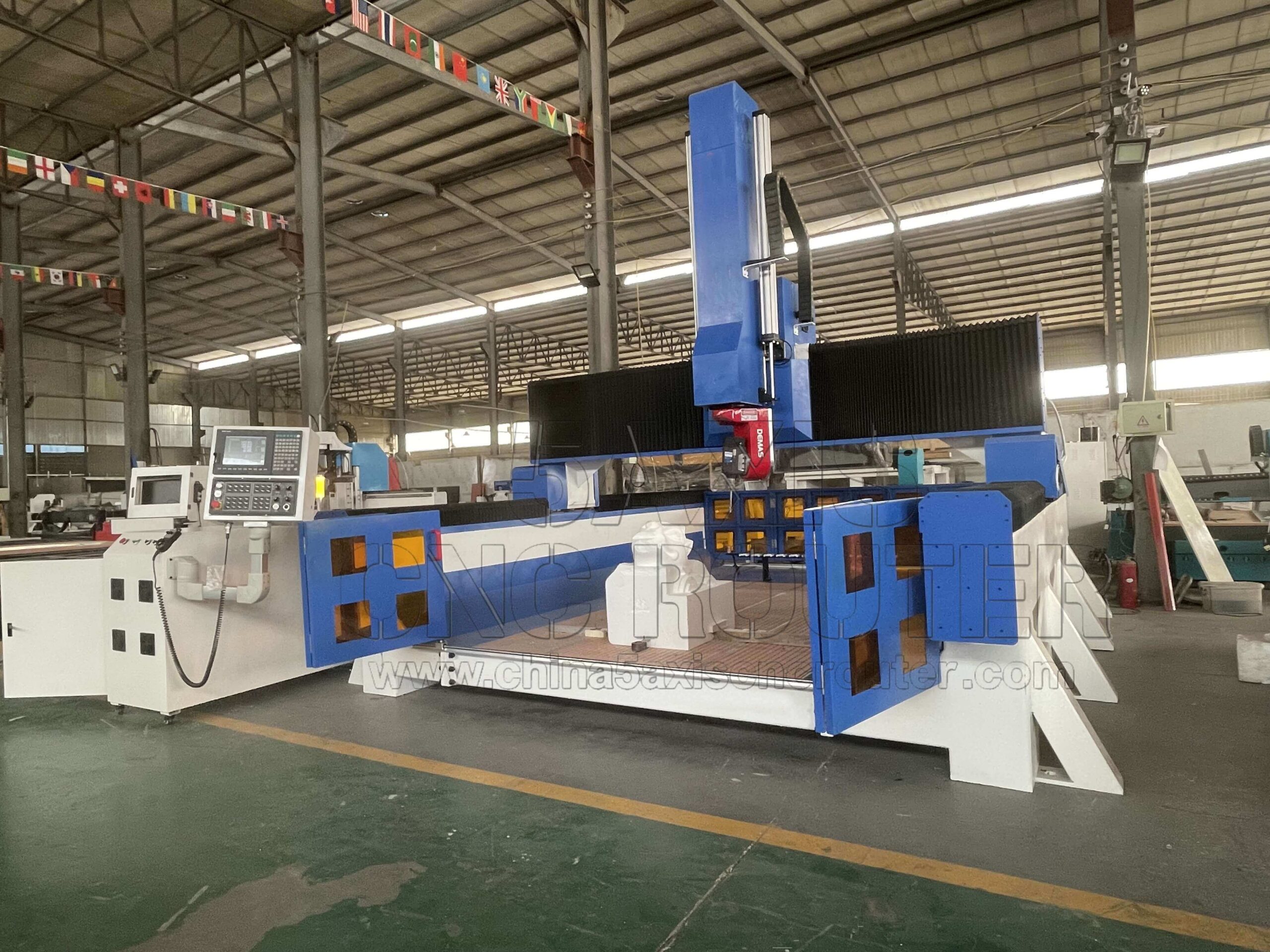
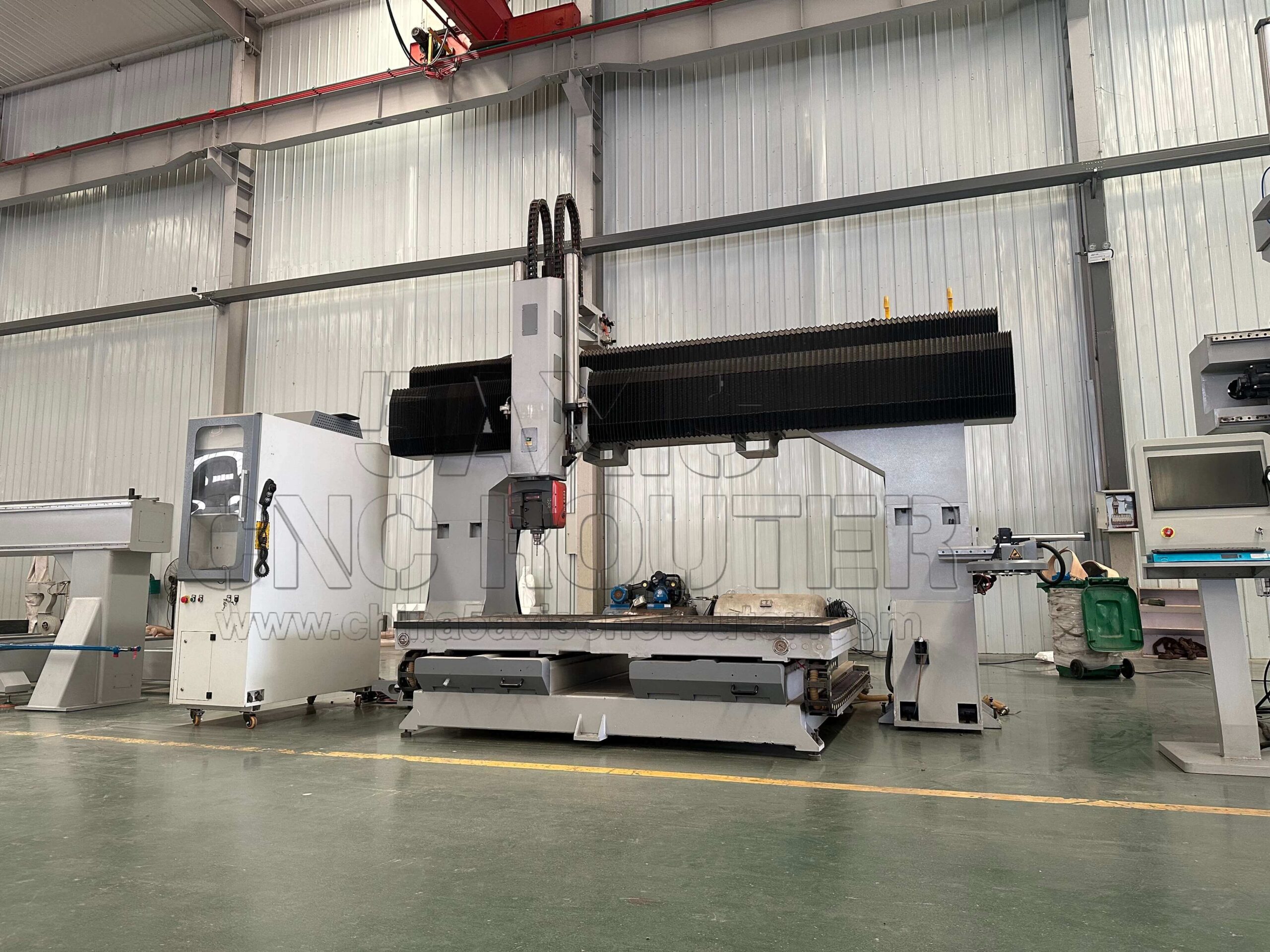
A 5-axis CNC machine is a machining center capable of moving its cutting tool (or workpiece) simultaneously along five distinct axes of motion. Unlike traditional 3-axis CNC machines — which only manipulate the tool in linear X, Y, and Z directions — a 5-axis machine adds two rotational (or tilting/rotating) axes, enabling far greater flexibility and complexity in machining operations.
The Five Axes Explained
- X-Axis: Horizontal movement — left to right along the workpiece.
- Y-Axis: Movement front-to-back (or depth-wise) across the width of the workpiece.
- Z-Axis: Vertical movement — up and down — controlling depth of cut.
- A-Axis: Rotational axis around the X-axis — allowing tilting or rotation of the workpiece/tool for angled machining.
- B-Axis (or sometimes C-Axis depending on machine configuration): Provides additional rotation or tilting — typically around the Y- or Z-axis — enabling complex angled cuts, contours, or undercuts.
By combining dual linear axes (X, Y, Z) with the two rotational/tilting axes (A, B or A, C), a 5-axis CNC machine can approach the workpiece from virtually any direction. This flexibility is key to machining complex shapes, curved surfaces, deep cavities, and multi-sided features in a single setup.
How 5-Axis CNC Machining Works
The workflow typically follows these steps:
- Design (CAD): The part or object is modeled in CAD software, with full 3D geometry.
- Toolpath Generation (CAM): The 3D model is imported into CAM software, which computes optimized toolpaths — considering tool geometry, material type, cut sequence, feed rates, and angles to exploit the multiple axes.
- CNC Programming & Setup: The generated toolpath (often G-code) is sent to the CNC controller; workpiece is fixtured; tool and machine parameters set.
- Machining — Multi-Axis Movement: The CNC controller drives the linear axes and rotational/tilting axes in synchronized motion, enabling the tool to reach complex surfaces, undercuts, and multifaceted geometries, often in a single continuous operation.
- Finishing & Inspection: Because of high precision and optimal tool orientation, many parts exit machining with better surface finish — reducing post-processing work such as sanding or smoothing.
Key Benefits of 5-Axis CNC Machining
Using a 5-axis CNC machine offers several advantages over 3-axis (or 4-axis) machining:
- Reduced Setup Time & Higher Efficiency: Multi-sided or complex parts can often be machined in a single clamping, avoiding multiple setups, re-fixtures, and repositioning — saving time and increasing throughput.
- Capability for Complex Geometry & Multi-Surface Machining: Angled surfaces, undercuts, curved contours — parts impossible or impractical on 3-axis machines — become feasible. Great for curved furniture components, organic shapes, molds, 3D carvings, aerospace or automotive parts.
- Improved Surface Finish & Part Quality: Consistent tool orientation and continuous machining paths reduce tool deflection and vibrations; parts come out with smoother surfaces, tighter tolerances, and less manual finishing.
- Flexibility & Versatility: Able to handle a wide variety of materials — from woods and composites to metals, plastics, and advanced materials — depending on spindle and fixture configuration.
- Cost & Time Savings in Production: For complex or custom parts, 5-axis reduces labor-intensive setup and finishing; for batch production or small-series manufacturing, it cuts time per part and improves repeatability and yield.
Because of these benefits, 5-axis CNC machining has become a standard in industries requiring precision, flexibility, and production of complex parts — from furniture and woodworking to mold making, metal parts, aerospace, automotive, and prototyping.
Considerations: Cost, Complexity, And When 5-Axis is Worth It
- Higher Initial Cost: 5-axis CNC machines tend to be more expensive than standard 3-axis mills or routers, due to added mechanical complexity, servo motors, rotary/tilt axis units, and control systems.
- Advanced Programming & Setup Requirements: Generating efficient 5-axis toolpaths requires experienced CAM programming — especially for complex geometries — and accurate fixturing. This raises the threshold for operator skill and process setup.
- Best Use Cases — Complex or Multi-Sided Parts: If your work involves simple 2D/3D shapes, flat panels, or basic cabinetry, a 3-axis machine may suffice. The power of 5-axis shines when parts have multi-surface geometry, undercuts, angled features, or need high-precision contours.
Thus, 5-axis CNC is best suited for advanced woodworking, custom furniture with organic shapes, mold & die work, metal parts with complex geometry, prototypes, sculptural or artistic pieces, and production requiring high repeatability and minimal post-processing.
Conclusion
A 5-axis CNC machine represents a major leap in machining capability — turning what was once tedious, multi-step manufacturing into streamlined, precise, and efficient processes. By combining linear and rotational motions, these machines unlock the ability to produce complex geometries, intricate surfaces, and multi-sided components in a single setup. For businesses and workshops aiming for high-quality, high-complexity, or custom work — whether in woodworking, furniture, mold-making, metal machining, or prototyping — 5-axis CNC machines offer unmatched versatility and value.
If you’re serious about expanding your production range, improving part quality, and minimizing manual labor and finishing, integrating 5-axis CNC machining into your workflow can be transformative.
Products Categories
Recently News


Why Choose Us
1.Experienced CNC manufacturer.
2.Strong R&D and innovation.
3.High-quality machine components.
4.Custom solutions available.
5.Strict quality control.
6.Fast production and delivery.
7.Professional technical support.
8.Competitive factory pricing.
9.Trusted by global customers.
10.One-stop CNC solutions.
Contact Us
- Wechat: ExtraCNC
- Whatsapp/Moblie:0086 15562628072
- Email: [email protected]
 EN
EN  AR
AR  EO
EO  IT
IT  DE
DE  KO
KO  JA
JA  RU
RU  AZ
AZ  BG
BG  CS
CS  DA
DA  EL
EL  ES
ES  FR
FR  ID
ID  LV
LV  NL
NL  ML
ML  PT
PT  TT
TT  SL
SL  TH
TH  UZ
UZ  UK
UK  SV
SV  TR
TR