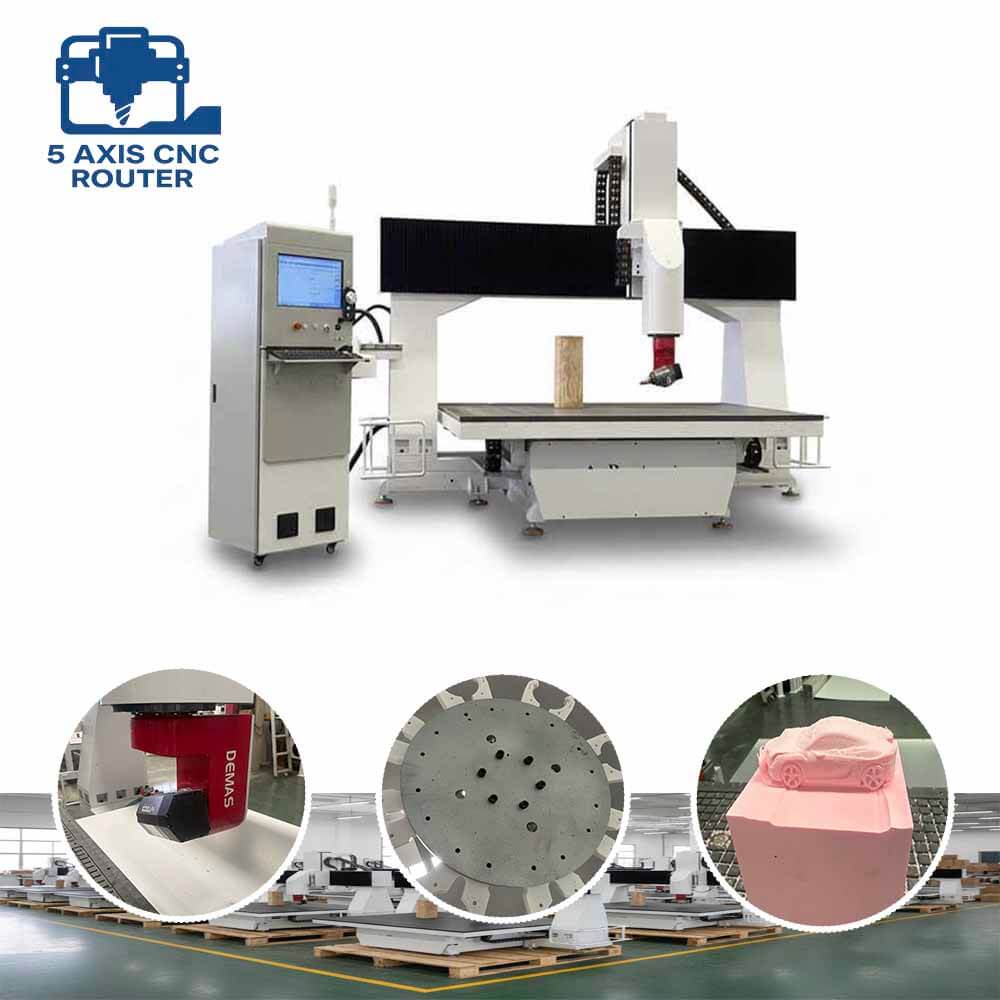
What Is a 5 Axis CNC Router? A Practical Explanation for Engineers
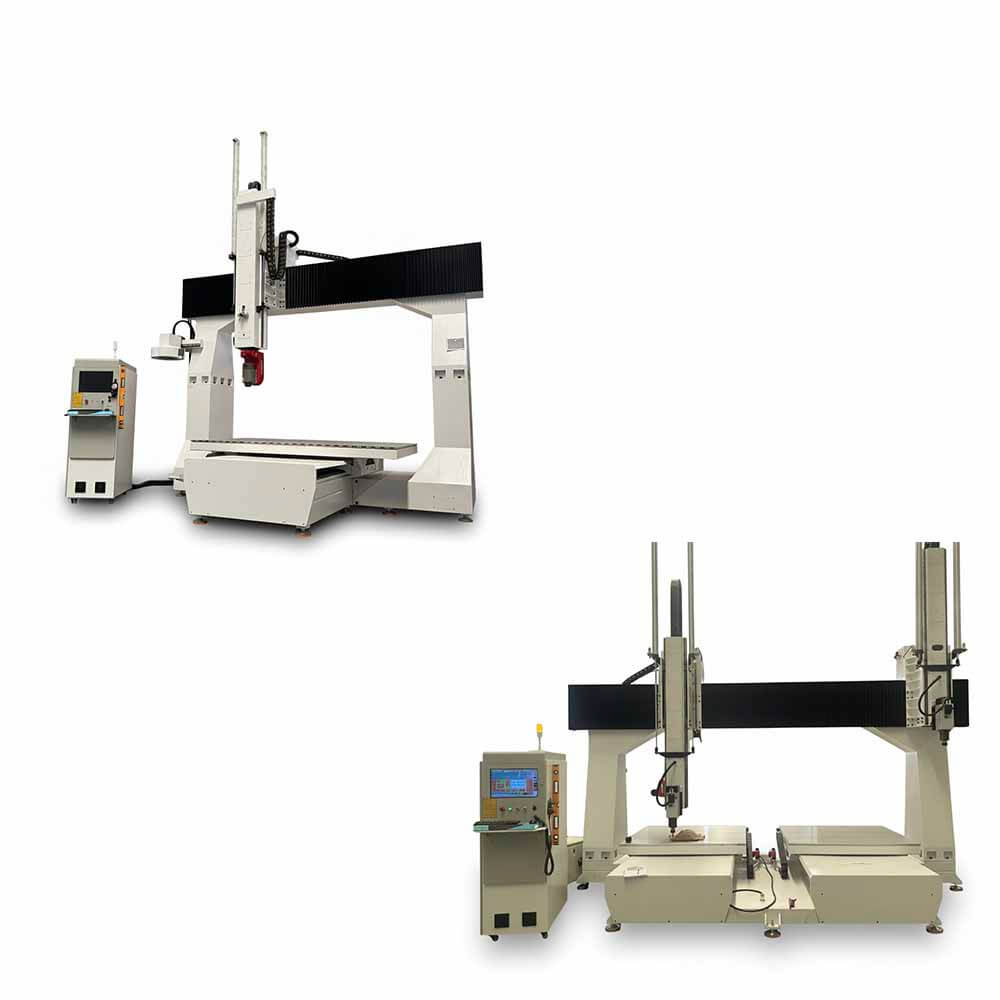
A 5 axis CNC router is often described as a "more advanced" CNC machine, but this description is vague and frequently misleading.
Many buyers encounter the term when their existing 3 axis equipment reaches its technical limits, yet they are unsure what problems 5 axis machining actually solves — and just as importantly, what it does not solve.
This article explains what a 5 axis CNC router really is, how it works from an engineering perspective, and when it makes sense to use one. The focus is on practical manufacturing logic rather than marketing claims.
Table of Contents
What Does “5 Axis” Actually Mean?
In CNC machining, an “axis” refers to a direction in which the tool or workpiece can move in a controlled, programmable manner.
X axis: left–right movement
Y axis: front–back movement
Z axis: up–down movement
A 3 axis CNC router moves the cutting tool along X, Y, and Z only. The tool orientation remains fixed.
A 5 axis CNC router adds two rotational axes, commonly referred to as:
A axis: rotation around the X axis
C (or B) axis: rotation around the Z or Y axis, depending on machine design
These two additional axes allow the tool or the workpiece to tilt and rotate during cutting, changing the tool angle relative to the part surface.
How a 5 Axis CNC Router Works in Practice
In a 5 axis CNC router, the control system continuously synchronizes linear motion (X, Y, Z) with rotational motion (A and C/B). This coordination allows the tool to maintain optimal contact with complex surfaces.
Common working principles include:
Tool tilting to maintain correct cutting angle on curved surfaces
Single-setup machining of multiple faces
Continuous surface interpolation for freeform geometries
Unlike indexed machining, where the machine stops and repositions before cutting, true 5 axis machining allows simultaneous movement of all five axes during cutting.
5 Axis CNC Router vs 3 Axis CNC Router
The fundamental difference is not accuracy or spindle power — it is geometric accessibility.
Limitations of 3 Axis Machining
A 3 axis router:
Requires multiple setups to machine different faces
Struggles with undercuts and deep angled features
Accumulates positioning errors with each re-clamping
What 5 Axis Adds
A 5 axis CNC router:
Machines complex shapes in a single setup
Reaches deep cavities and angled surfaces
Reduces fixture complexity
Improves surface consistency on curved parts
However, if your parts are planar or prismatic, a 5 axis router may offer little advantage.
Typical Applications of a 5 Axis CNC Router
5 axis CNC routers are used where geometry, not volume, is the primary challenge.
Common application areas include:
Complex mold and pattern manufacturing
Aerospace interior and composite components
Freeform surface machining
Large structural parts requiring multi-face access
High-end woodworking and sculptural elements
In these cases, the ability to maintain correct tool orientation is more valuable than raw cutting speed.
Materials Commonly Machined on 5 Axis CNC Routers
A 5 axis CNC router is optimized for materials that require complex shaping rather than extreme cutting forces.
Typical materials include:
Aluminum (light to medium-duty applications)
Wood and engineered wood products
Foam and model board
Composite materials
Plastics and resins
Accuracy Expectations: What Is Realistic?
Accuracy in 5 axis machining depends on more than axis count.
Key influencing factors:
Machine structural rigidity
Rotary axis backlash and calibration
Control system kinematics
CAM software quality
Operator skill
While 5 axis routers can achieve high precision, the complexity of motion introduces additional error sources. Good results rely on system-level integration, not just machine specifications.
When a 5 Axis CNC Router Makes Sense
A 5 axis CNC router is justified when:
Parts require continuous multi-angle machining
Multiple setups cause unacceptable accuracy loss
Tool reach limitations affect surface quality
Production flexibility is more valuable than throughput
It is not automatically the right choice for:
Flat panel processing
Simple cabinet or furniture parts
High-volume repetitive machining
Common Misconceptions About 5 Axis CNC Routers
“5 axis machines are always more accurate” — accuracy depends on design and calibration.
“They replace all other CNC machines” — they complement, not replace.
“Programming is automatic” — CAM complexity increases significantly.
“Any operator can run them” — training requirements are higher.
Understanding these limitations prevents costly investment mistakes.
Conclusion
A 5 axis CNC router is a powerful manufacturing tool when matched to the right application. Its true value lies in geometric freedom, reduced setups, and improved surface quality on complex parts.
Before investing, the most important question is not “Is 5 axis better?” but:
“Does my part geometry require continuous multi-axis motion to be manufactured efficiently and accurately?”
Answering this honestly is the foundation of a sound purchasing decision.
Products Categories
Recently News


Why Choose Us
1.Experienced CNC manufacturer.
2.Strong R&D and innovation.
3.High-quality machine components.
4.Custom solutions available.
5.Strict quality control.
6.Fast production and delivery.
7.Professional technical support.
8.Competitive factory pricing.
9.Trusted by global customers.
10.One-stop CNC solutions.
Contact Us
- Wechat: ExtraCNC
- Whatsapp/Moblie:0086 15562628072
- Email: [email protected]
 EN
EN  AR
AR  EO
EO  IT
IT  DE
DE  KO
KO  JA
JA  RU
RU  AZ
AZ  BG
BG  CS
CS  DA
DA  EL
EL  ES
ES  FR
FR  ID
ID  LV
LV  NL
NL  ML
ML  PT
PT  TT
TT  SL
SL  TH
TH  UZ
UZ  UK
UK  SV
SV  TR
TR